Roadmap
| # | Item | Details |
|---|---|---|
| 01 | Scraper | Done: collects manga lists from public profiles, without straining MAL servers. |
| 02 | API and dashboard | Done: a system to query and display the data collected. |
| 03 | Anonymization | Work in progress: usernames get replaced with individual ids to prevent re-identification. |
| 04 | Public dataset | An anonymized version of the dataset will be published. |
| 05 | Recommender system | Recommend readings based not on just one manga interaction but on my whole list. |
Why did I build this project?
Tsugiwa is a personal project I have been working on in my free time. I like to read a lot (a lot), but the recommendations on MyAnimeList aren't the best. Either the recommendations are made by users based on one of your readings (but they don't take into account your list), or recommendations on what to read next based on one manga (again, this doesn't take into account your whole list). My goal was to build a recommendation system that would recommend readings to me, not based on just one manga interaction but on my whole list.
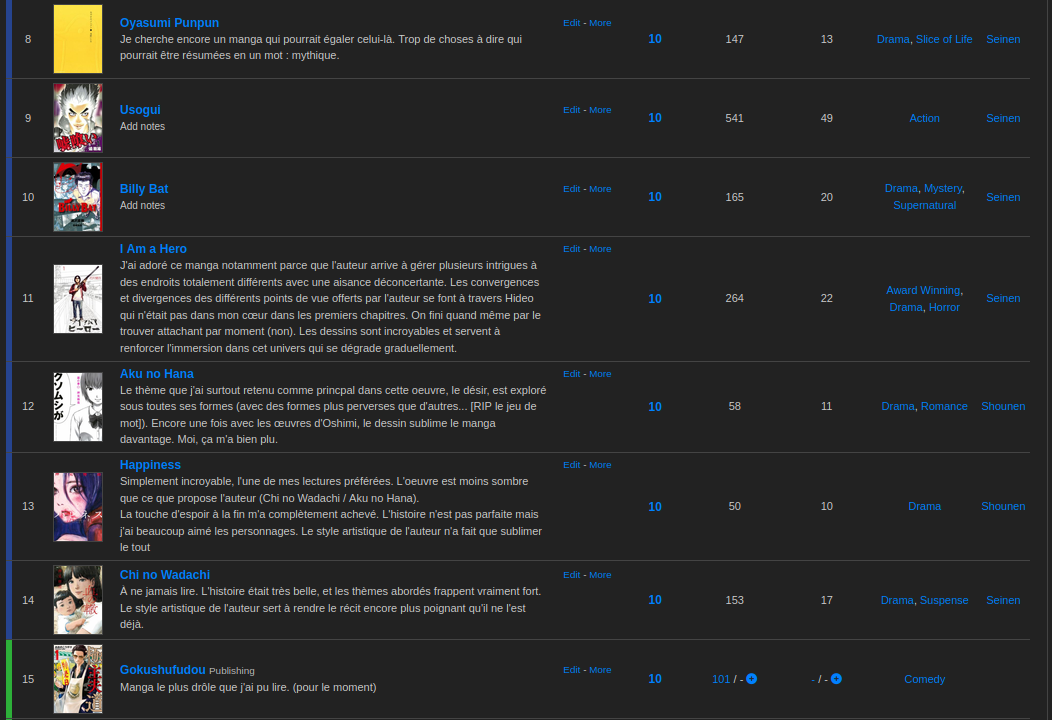
To build such a system, I needed data on user interactions with mangas (seeing how people are interacting with different mangas). So I built this project with the goal of scraping 500k+ user profiles and experimenting on a recommender system.
No endpoints were offered to get user entries without OAuth, hence the scraper collecting data on public profiles. Any data collected will not be sold; an anonymized version of the dataset will be published.
Another constraint was that the scraping had to be done while not straining MAL servers (to be as respectful as possible). Any significant amount of data collected needs time, and I couldn't leave my computer running that long. Fortunately (or not), I built a small server on which I was running different services using Docker. Hence I chose to build a solution that could run remotely, that would hold persistent data across runs and be accessible via a UI.
Architecture overview
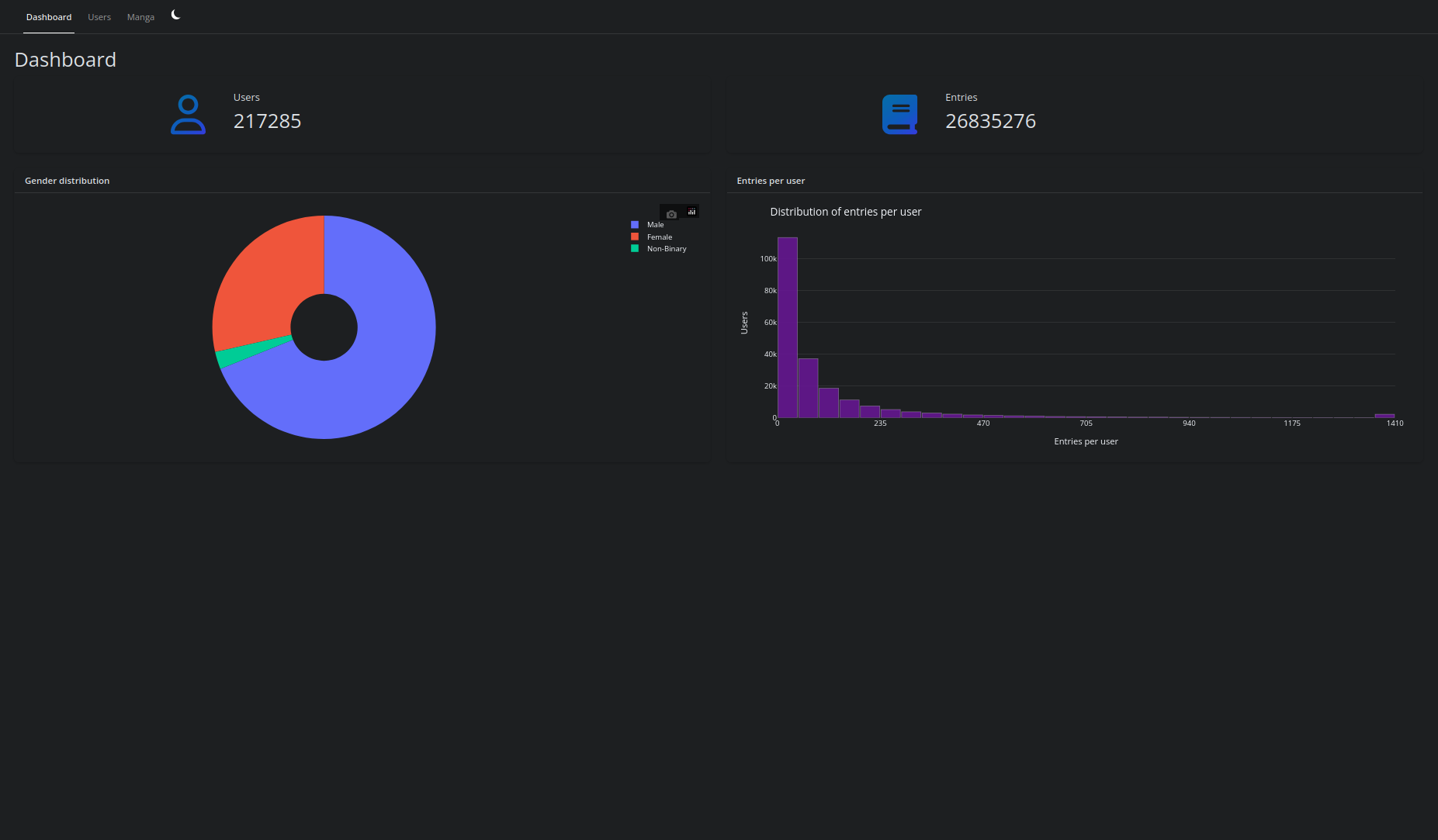
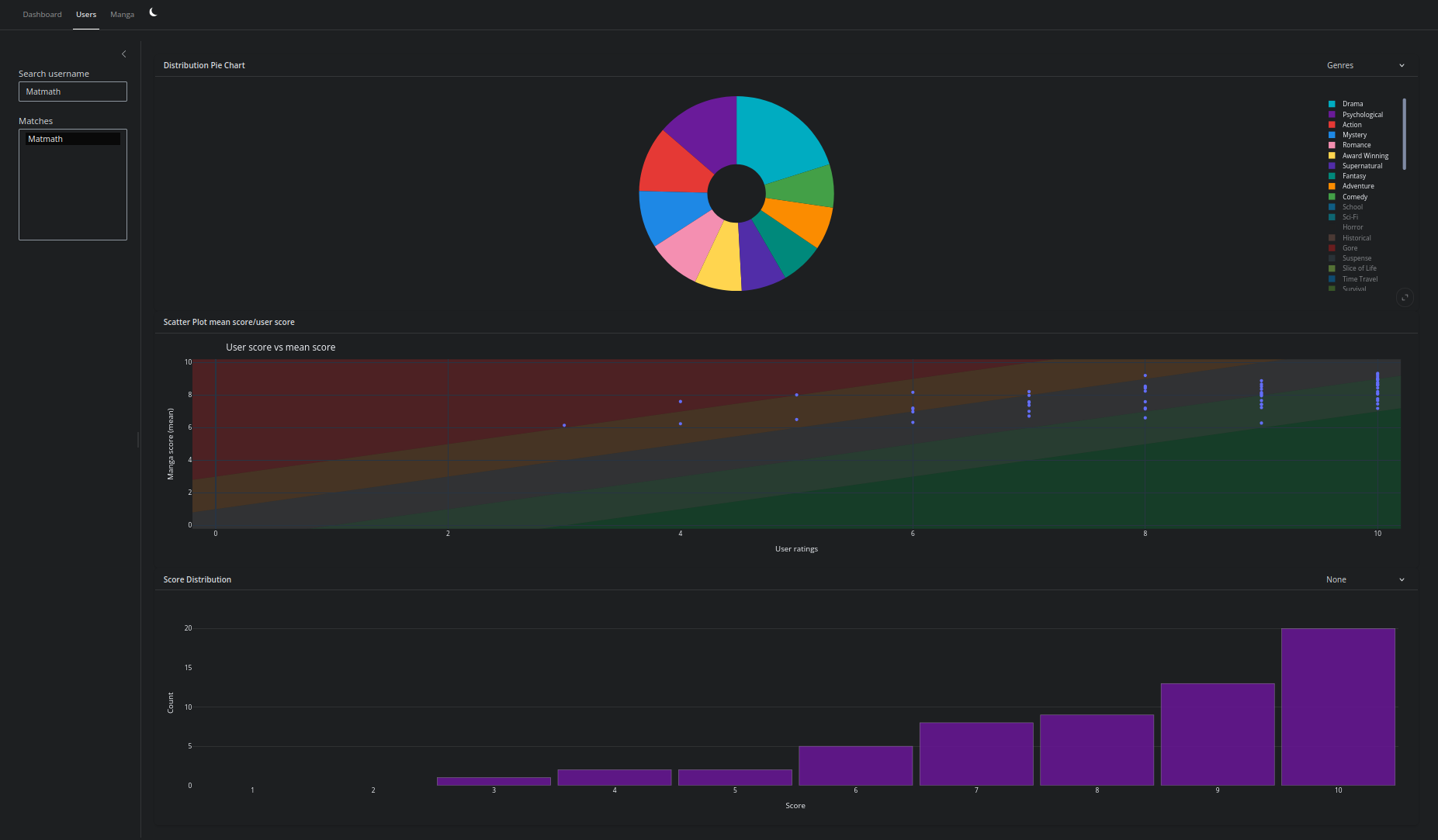
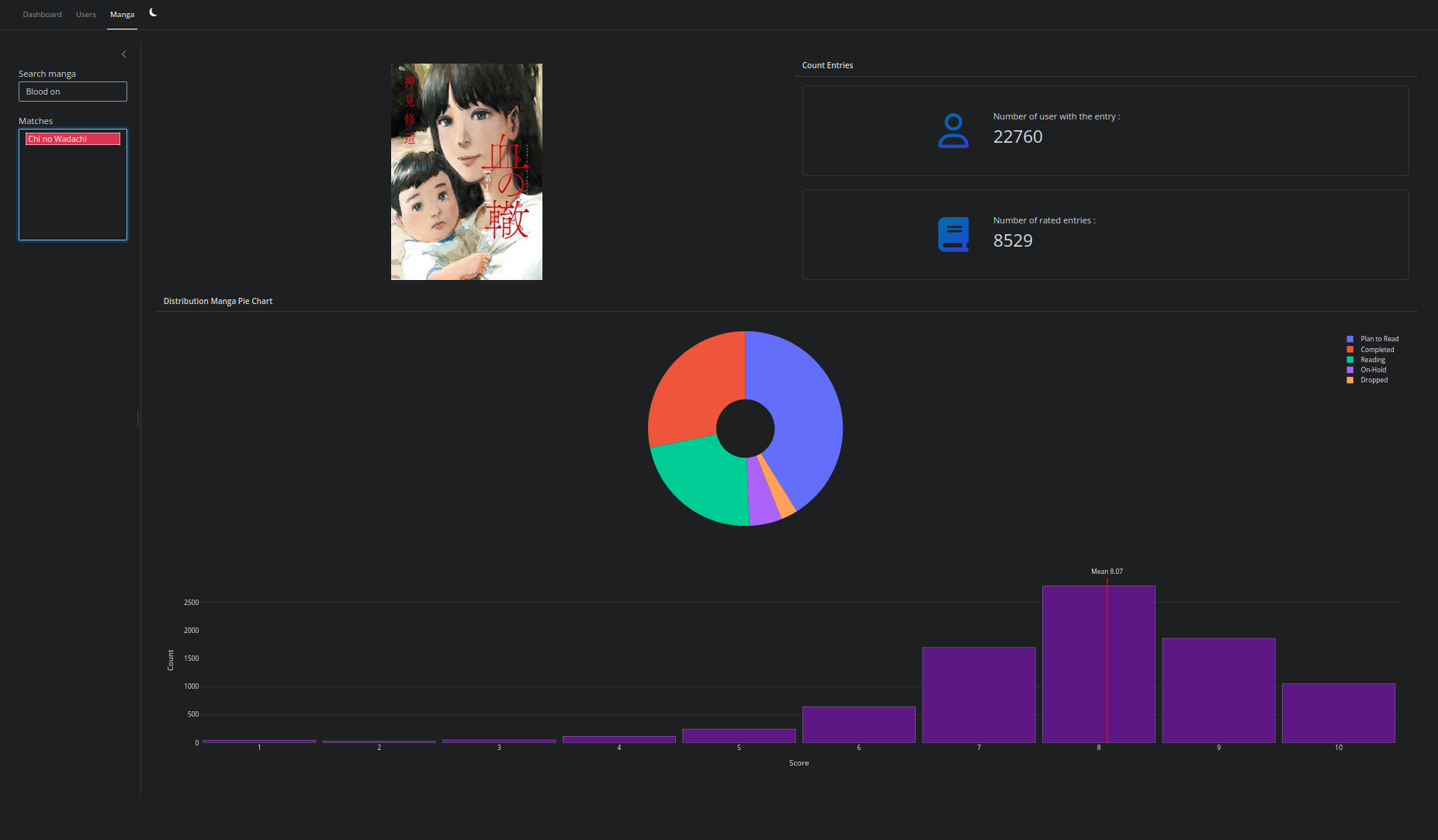
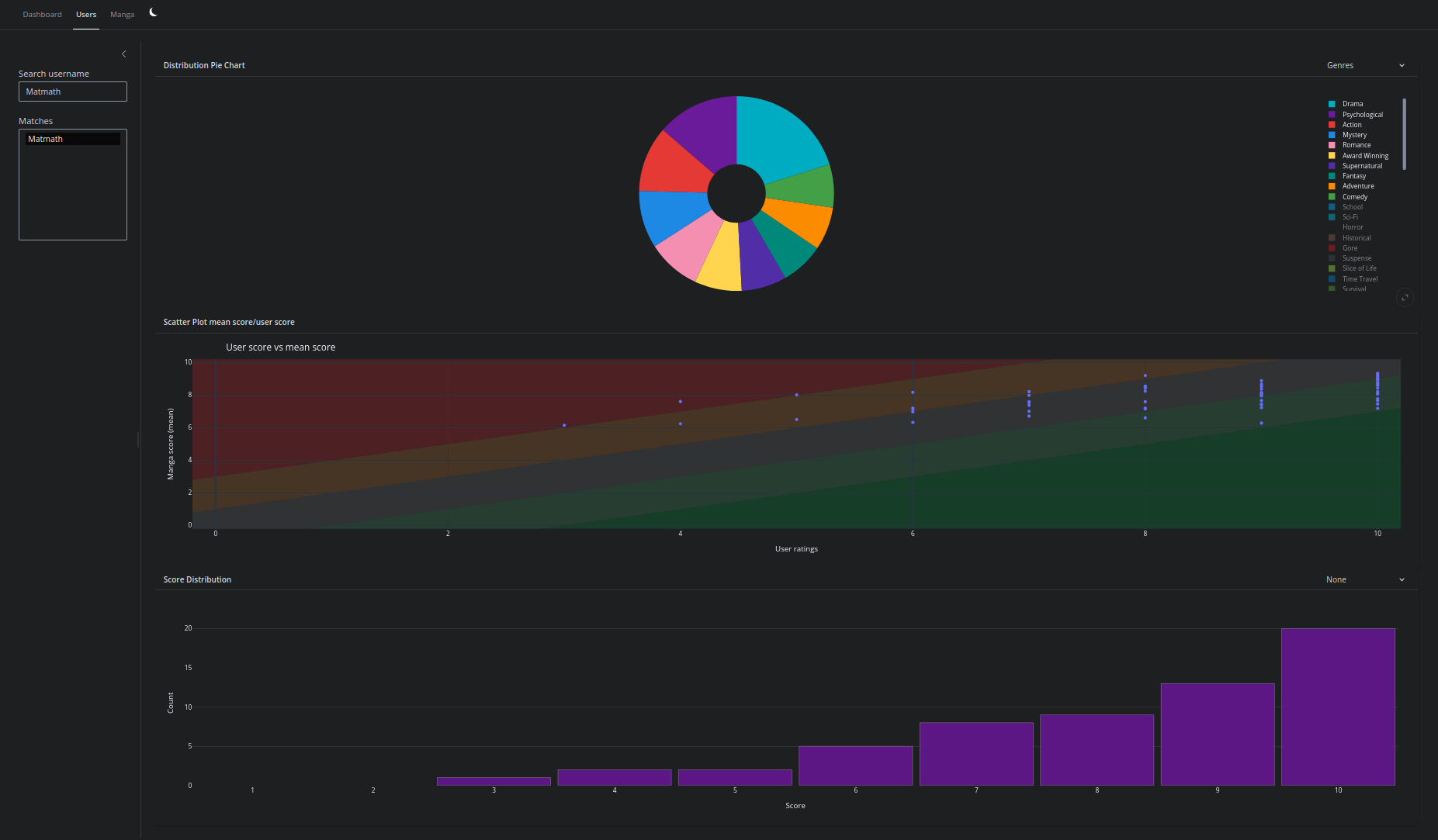
This project was entirely made in Python. The scraper stores the data in a SQLite database. On top of it, an API was built using FastAPI (allowing me to easily query data or connect the database to other applications), as well as a dashboard using Shiny (the goal wasn't to make anything complex but to have a quick way to browse through certain parts of the data).
These 3 services run in Docker containers to isolate each one.
Showcase
A simple dashboard to navigate the data available as well as follow the data trends.